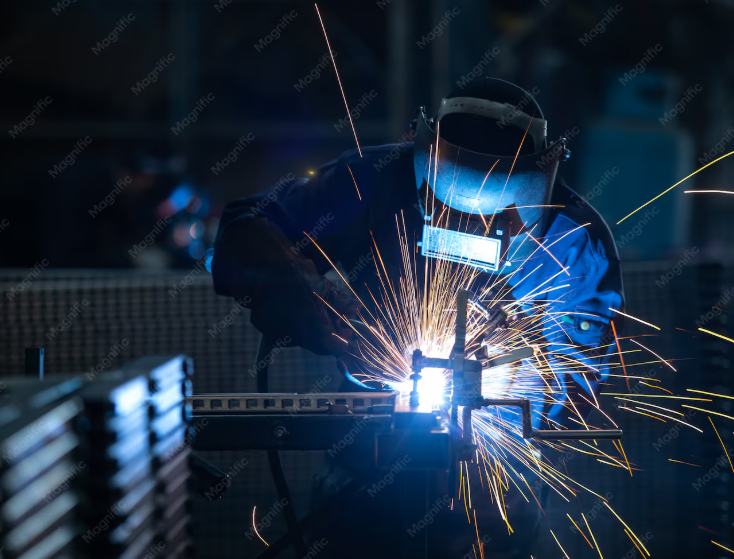
Welding is a critical trade in Canada’s construction and manufacturing sectors, but it comes with inherent risks. From intense heat and sparks to toxic fumes and electrical hazards, prioritizing safety isn’t just a good practice—it’s the law.
Whether you are operating a shop or providing mobile welding services across Ontario, adhering to Occupational Health and Safety (OH&S) regulations and CSA standards (such as CSA W117.2) is vital to protecting workers and ensuring legal compliance.
Here are the foundational safety measures every Canadian welder must follow:
1. Personal Protective Equipment (PPE) is Non-Negotiable
Standard workwear won't cut it when sparks fly. Every welder must be equipped with:
- Auto-Darkening Welding Helmet: Must comply with CSA Standard Z94.3 to protect eyes from harmful ultraviolet (UV) and infrared (IR) radiation.
- Fire-Resistant Apparel: Leather jackets, aprons, and heavy-duty welding gloves. Avoid synthetic fabrics like polyester, which can melt onto the skin.
- Safety Footwear: Grade 1 CSA-approved steel-toe boots to protect against heavy falling objects and hot slag.
2. Guard Against the "Silent Killer": Welding Fumes
The smoke generated during welding contains a cocktail of toxic gases and metal dust (like hexavalent chromium and manganese).
- Ventilation: Always work in well-ventilated areas or use local exhaust ventilation (LEV) systems to capture fumes at the source.
- Respiratory Protection: When ventilation is insufficient, welders must wear CSA-approved respirators (like N95 or particulate respirators) tailored to the specific metals being welded.
3. Implement Strict Fire and Electrical Safety
Mobile and on-site welding require extra vigilance regarding surroundings.
- Fire Watch: Maintain a dedicated "fire watch" during and for at least 30–60 minutes after welding finishes to ensure no stray sparks ignite hidden materials.
- Keep a Clear Zone: Remove all flammable liquids, wood, and paper within a 11-meter (35-foot) radius of the welding area.
- Electrical Grounding: Ensure all welding equipment is properly grounded and cables are dry and free of exposed wires to prevent severe electric shocks.
The Bottom Line
In Canada, a safe jobsite is a successful jobsite. By training your team on OH&S protocols, investing in high-quality PPE, and maintaining your equipment, you protect your business's most valuable asset: its people.